
FINSBURY PARK HIGH STREET PLACE LAB
CLIENT: London Borough of Islington
LOCATION: London
YEAR: 2026
A strategy for a more inclusive, welcoming and economically vibrant Finsbury Park
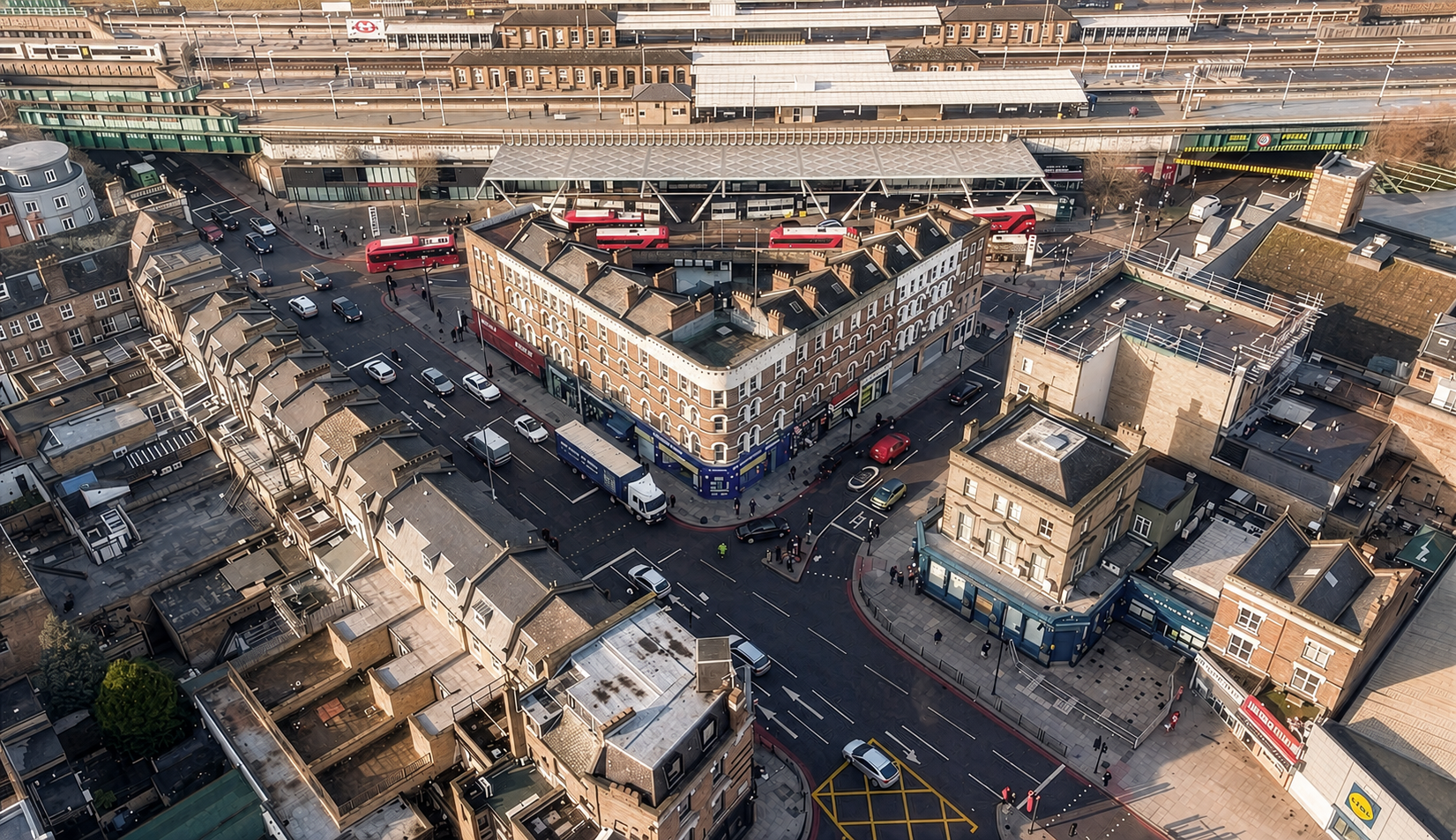
JA Projects, working with PRD, were appointed by the London Borough of Islington to develop an Inclusive Economy Strategy as part of the Mayor of London’s High Street Place Labs programme. The project focused on how Finsbury Park town centre can become safer, more welcoming and more useful to local people, particularly during the evening and at night.
The work takes the form of a long-term vision and a phased programme of possible projects. It brings together engagement with residents, businesses, community organisations and council teams, alongside analysis of movement, spending, local activity and the way different parts of the town centre are used after dark using the GLA’s High Streets Data Service. This has helped build a clearer picture of who Finsbury Park currently serves, where people choose to spend time, and where poor lighting, cluttered streets, difficult crossings and limited evening activity contribute to a sense of discomfort or transience.
The strategy responds to the strong social, cultural and economic life already present in the area. Finsbury Park is shaped by independent businesses, food cultures, fashion, performance, fitness, public spaces and civic institutions. Many of these uses are highly valued, but they are often dispersed, hidden from view or disconnected from one another. The project looks at how these existing assets can be supported, made more visible and connected into a stronger local offer throughout the day and evening.
The proposals are organised around three areas of work. The first looks at the station and its surroundings as a more welcoming civic gateway, with clearer routes, improved crossings, greening, public art, kiosks and a broader evening offer. The second focuses on the distinct cultural and economic clusters around Fonthill Road, Wells Terrace and Blackstock Road, supporting fashion and making, food and hospitality, and performance and fitness. The third looks at the streets between these areas, with proposals for better lighting, wayfinding, seating, planting, wider pavements and safer walking routes.
Particular attention has been given to how safety is experienced by women, girls and gender-diverse people, and how this can be improved through activity, visibility, lighting, maintenance, access to toilets and clearly signposted safe spaces.
Recommendations range from short-term trials, including events, markets, cultural programming, station artwork, kiosks and temporary street improvements, through to longer-term investment in public space, affordable workspace, food enterprise, cultural facilities and greener pedestrian routes. Each proposal is linked to possible partners, funding routes, cost, complexity and likely impact, providing a practical framework for testing and delivering change over time.
The strategy is already being deployed with the first project being a pocket parklet on Blackstock Road, creating shared space for independent food businesses, part of the Mayor of London’s Summer Streets 2026 programme.
CORE TEAM: JA Projects, PRD, London Borough of Islington
SUPPORTERS AND COLLABORATORS: GLA High Street Data Service, Finsbury Park residents and businesses
